A landmark $18.9 million philanthropic gift will supercharge Australia’s fight to beat brain cancer and accelerate new treatments, with the University of Newcastle and the Mark Hughes Foundation (MHF) today announcing a major expansion of their partnership.
The commitment brings the MHF’s total contribution to more than $36 million — placing it among the largest philanthropic investments in brain cancer research nationally and marking the biggest in the University’s history.
The investment will drive the next phase of research—translating discoveries into clinical practice—with brain cancer still the leading cause of cancer death in children and adults under 40, and survival outcomes largely unchanged for decades.
Mark Hughes, OAM, a former Newcastle Knights premiership player and NSW State of Origin representative, established the Mark Hughes Foundation with his wife Kirralee, following his diagnosis with brain cancer in 2013. The Foundation’s driving mission is to raise awareness, fund research and support patients and families affected by brain cancer.
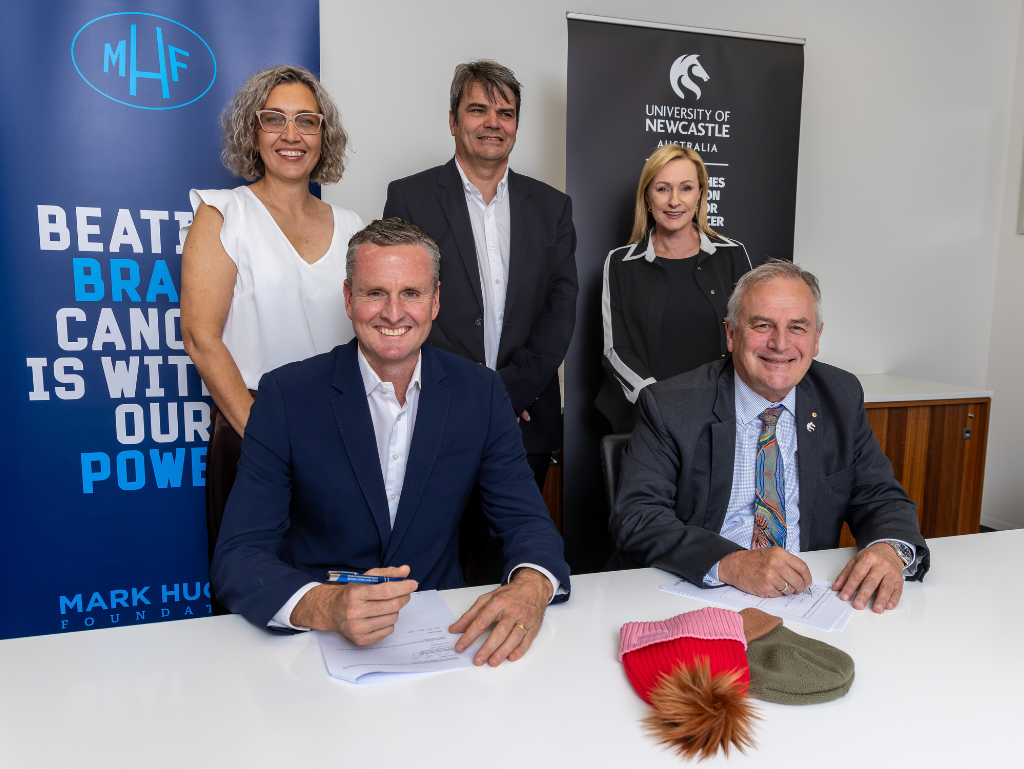
(front, l-r) Mark Hughes, OAM, and University of Newcastle Vice-Chancellor Professor Alex Zelinsky, AO (back) Kirralee Hughes, MHF Centre for Brain Cancer Research Director Professor Mike Fay, Pro Vice-Chancellor College of Health Medicine and Wellbeing Professor Lisa Wood.
VISION: MHF FUNDING ANNOUNCEMENT HERE
“This commitment is a proud moment for everyone who has supported the Mark Hughes Foundation over the years. What started as a conversation around a hospital bed after my diagnosis has grown into a community movement that is helping change the future of brain cancer research in Australia.
“Every beanie sold, every donation made, every event attended and every person who has stood with us has contributed to this moment. Together, our community has helped create one of the largest philanthropic investments in brain cancer research in this country.
“This $18.9 million commitment isn’t just about funding research—it’s about giving hope to every family, including mine, that is facing a brain cancer diagnosis. It is ensuring we continue pushing towards our ultimate goal of finding better treatments and, one day, a cure.”
Since its establishment in 2022*, the University’s MHF Centre for Brain Cancer Research has rapidly transformed Newcastle into a powerhouse of collaboration and innovation in tackling the disease.
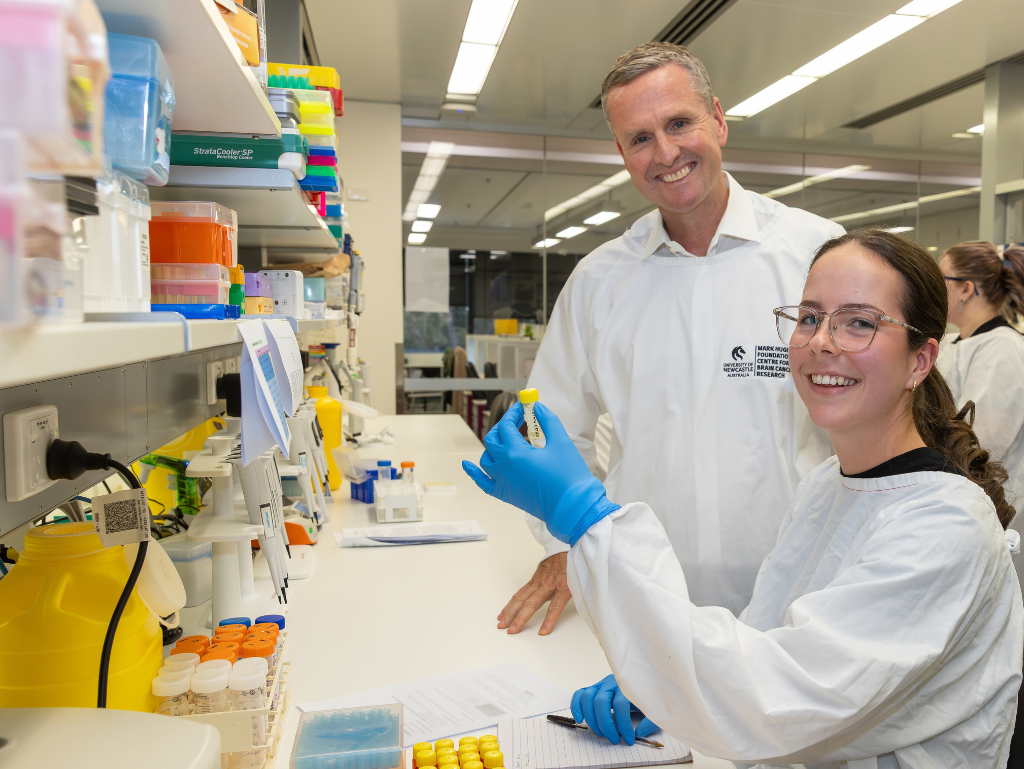
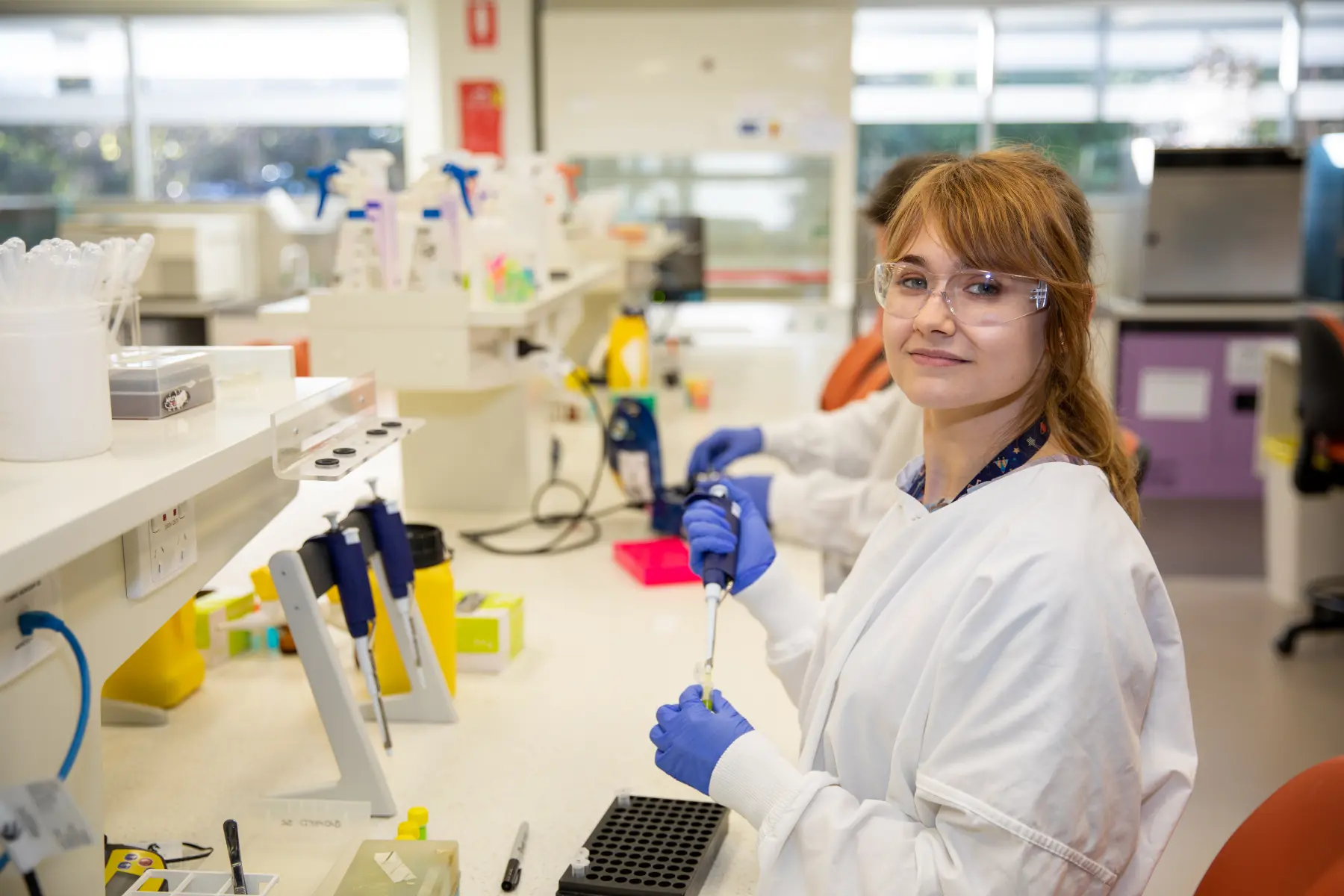
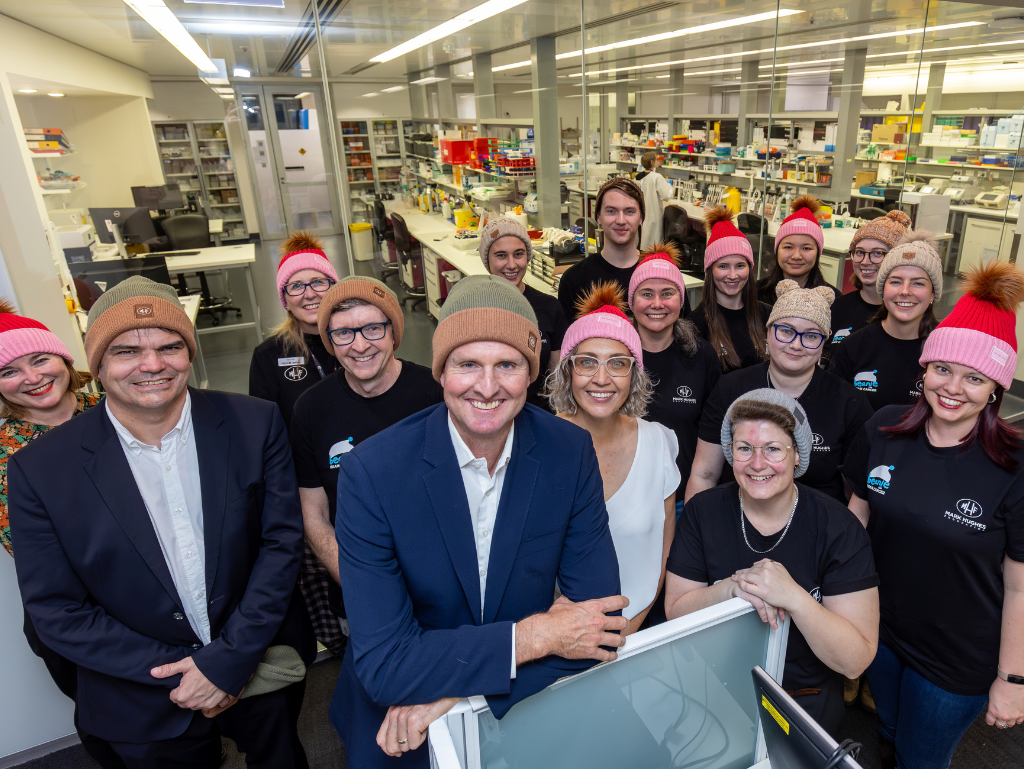
Mark Hughes with Ellie Bassos, a Project Assistant at the Mark Hughes Foundation Centre for Brain Cancer Research – supporting research aimed at improving outcomes for people with brain cancer.
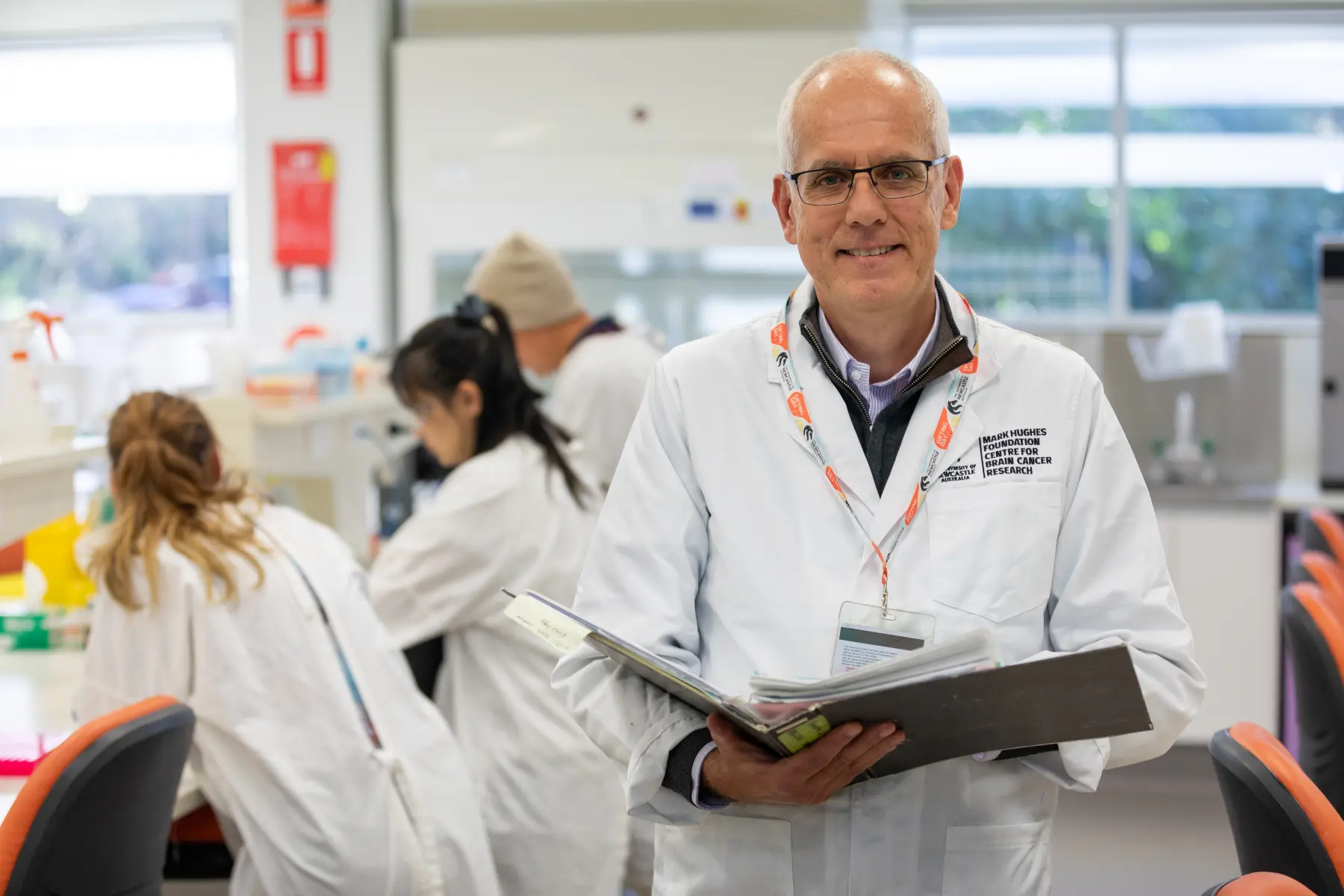
Clinician scientist and MHF Centre Director, Professor Mike Fay, said the University’s partnership with the MHF had enabled fragmented efforts in brain cancer research to evolve into a nationally connected research ecosystem.
Researchers, clinicians and partners across Australia, and globally, are tackling brain cancer collaboratively, focused on improving outcomes for patients and their families.
“In just a few years, we’ve built a strong foundation and emerged as a unifying force – bringing together expertise from across the nation to drive innovation, impact for patients, and lasting change.
“The first phase of the MHF Centre focused on building the infrastructure – investing in people, equipment and partnerships.
“Today, we have the expertise, technology, and strong relationships with the nation’s leading researchers in brain cancer research. By working as one team, we’re achieving far greater impact than any of us could alone,” Professor Fay said.
With both existing and renewed funding, Professor Fay said the next six years would be about translating discovery into the clinic.
“We have more than 160 members of the MHF Centre nationwide and are now forging strong international research collaborations.
“We are working to leverage our strengths in imaging, drug repurposing and theranostics** to guide national efforts and ensure no brain cancer patient is left behind. We are also continuing to lead the conversation with government and industry, championing a ‘Team Australia’ approach to solving one of the most challenging cancer problems of our time.
“This next phase is about turning our momentum into real-world change — including new approaches to treatments and accelerating drug development.”
University of Newcastle Vice-Chancellor, Professor Alex Zelinsky, AO, extended the University’s deepest thanks to the Mark Hughes Foundation for its vision, generosity, and unwavering commitment to transforming brain cancer research in Australia.
“The establishment of the MHF Centre has been a game-changer,” Professor Zelinsky said.
“Thanks to the MHF Centre, we now have access to national registries, the MHF Brain biobank, advanced imaging and biomarker platforms, and a network of researchers working together across the country.
“These foundations have positioned us to move with speed and purpose, translating research from the lab into patient care and delivering outcomes that matter.
“The next six years represent a unique opportunity to accelerate progress and bring together everything we’ve built to make a tangible impact on the lives of brain cancer patients, today and into the future.
“We are privileged to partner with the Mark Hughes Foundation, and it really shows what incredible progress, and impact can be reached when we work together.
“I am in awe of the incredible work of the MHF, particularly the efforts of Mark Hughes and his wife Kirralee,” Professor Zelinsky said.
THE MHF CENTRE’S FIRST FOUR YEARS:
▪ By sharing tools and platforms, the MHF Centre is reducing duplication and enabling a nationally connected research ecosystem. It now has established access to nationally significant resources that strengthen its research capabilities, including:
▪ WEHI BRAIN Registry – comprehensive data from over 10,500 patients
▪ Brain Cancer Biobank – 10 years of samples housed at HMRI
▪ Blood-Based Biomarker Platform – based in Queensland and co-funded by MHF and NHMRC
▪ Three brain cancer symposiums hosted in Newcastle and Melbourne in collaboration with The Brain Cancer Centre
▪ Five MHF Brain Cancer Coordinators across 14 locations
▪ The Centre is supported by 40 collaborating medical research institutes, hospitals and universities, five philanthropic partners, 70+ researchers based at the Centre in Newcastle, and 20 clinician scientists – highlighting a strong, multidisciplinary community-driven commitment to improving outcomes in brain cancer care.
▪ Of the 70 researchers based at the Centre, 47 are early career researchers including honours and PhD students, research assistants and post-docs. This number has doubled since 2025.
▪ As the Centre deepens ties with other institutions such as The Brain Cancer Centre at the Walter and Eliza Hall Institute (WEHI) and The Olivia-Newton John Cancer Research Institute, and other universities we will see progress in solving this disease.
* The partnership between the Mark Hughes Foundation (MHF) and the University of Newcastle was established in 2021 with MHF making a $7.5 million five-year philanthropic commitment to establish a dedicated research team led by the inaugural MHF Chair in Brain Cancer. In 2022 MHF committed a further $7.5 million to establish the Mark Hughes Foundation Centre for Brain Cancer Research. The University also supported the Centre to fast-track brain cancer research with its contribution of $10 million.
** Theranostics is an innovative, personalised approach to medicine that combines diagnostic imaging and targeted therapy into a single, seamless intervention. Primarily used in advanced cancer care, it uses paired radioactive drugs to accurately locate tumours and selectively deliver radiation to destroy cancer cells while sparing healthy tissue.